The Mis-Education of the Negro - Carter G. Woodson
$14.95
Write a Review
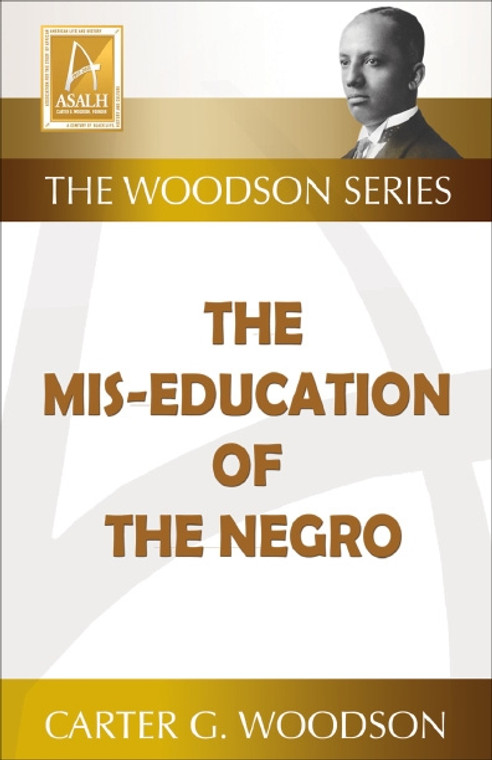
The Mis-Education of the Negro - Carter G. Woodson
Considered Woodson’s seminal work, this text explores his thesis that African Americans were being culturally indoctrinated, rather than taught, in American schools. He asserts that this conditioning caused African Americans to become dependent and to seek out inferior places in the greater society of which they were a part. 1969*, 2016. 215 pgs. Paperback.
*Original publication date.
The Mis-Education of the Negro by Carter G. Woodson
Few works in the African American intellectual tradition have endured with the quiet force of Carter G. Woodson's The Mis-Education of the Negro. First published in 1933, this slender volume has been read, taught, and argued over for generations, and it continues to find new readers who see themselves in its pages. Woodson, the scholar widely honored as the father of Black history, wrote it as both a sharp critique and a steady call to action.
Read More...
At its heart lies a single piercing argument. Woodson held that the schooling offered to Black Americans had been shaped to make them doubt their own heritage, defer to others for leadership, and accept a place defined for them rather than by them.
Yet Woodson did not stop at criticism. He pressed Black communities to study their own history, build lasting institutions, support their own enterprises, and lead without waiting for permission.
Readers Keep Returning to This Work for What It Reveals About
- How education can shape a person's sense of worth and ambition
- The deep roots of cultural conditioning carried across generations
- Practical paths toward community strength and self reliance
- Questions that remain alive in classrooms and conversations today
Frequently Asked Questions
When was The Mis-Education of the Negro first published?
It appeared in 1933 and has remained continuously in print.
Is the book difficult to read?
No. Woodson wrote in clear, direct language meant for a broad audience.
Who should read it?
Educators, students, parents, and anyone curious about history, identity, and the purpose of learning.